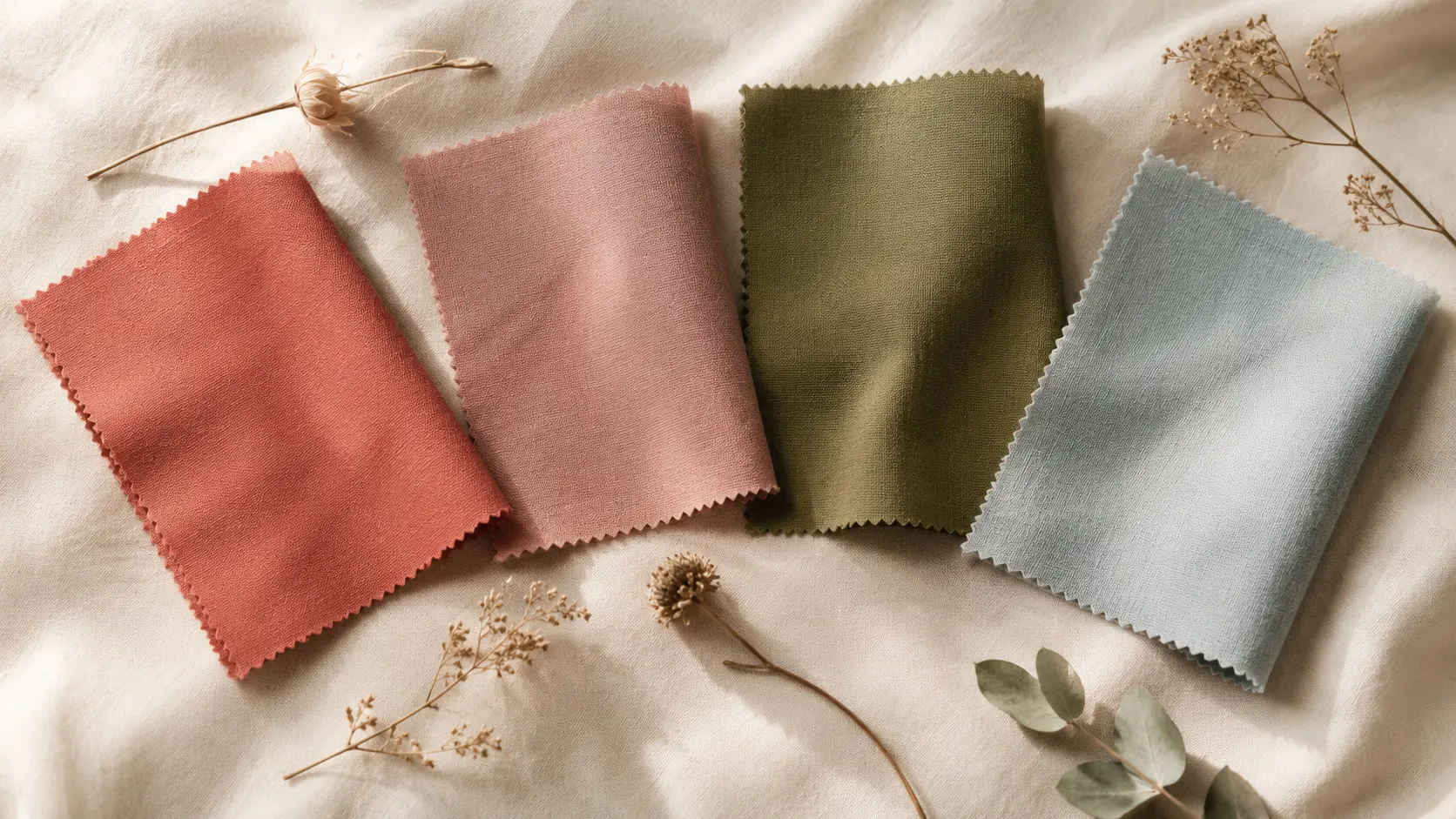
Some colours make your face come alive. Others make you look tired.
The difference isn't the cut, the brand, or how expensive the fabric is. It's the colour — and whether it works with your natural colouring or against it.
Seasonal colour analysis is the system that tells you which is which. Your natural colouring has specific characteristics that certain colours will enhance, while others will cast shadows, cause redness, or simply make you look dull and flat.
The Four Dimensions
Every person's coloring can be measured across four key dimensions:
Temperature — Is your undertone warm (golden, peachy, olive) or cool (pink, blue, ashy)? This single trait has the biggest impact on which colors flatter you.
Value — Is your overall coloring light or deep? Someone with very pale skin and blonde hair is light. Someone with deep brown skin and black hair is deep.
Chroma — Is your coloring vivid and clear, or soft and muted? Clear people glow in bright, saturated colors. Muted people look best in blended, dusty tones.
Contrast — How different is your hair color from your skin tone? High contrast people (dark hair, fair skin) wear bold combinations well. Low contrast people glow in more tonal, blended outfits.
The 12-Season System
These four dimensions map to 12 seasonal palettes:
- ✦Spring (warm, clear): Light Spring, True Spring, Bright Spring
- ✦Summer (cool, soft): Light Summer, True Summer, Soft Summer
- ✦Autumn (warm, muted): Soft Autumn, True Autumn, Deep Autumn
- ✦Winter (cool, clear): Bright Winter, True Winter, Deep Winter
Why It Matters
Wearing your seasonal palette colors makes you look healthy, rested, and polished. Wrong colors make you look washed out, tired, or harsh — regardless of how expensive or stylish the clothing is.
The 12-season system is used by professional color consultants worldwide. ChromaMe brings this methodology to you through precision colour science — privately, in seconds.